
ACRE
How Atletico Madrid’s 11-game winning streak has been powered by their substitutes

Atletico Madrid have won 11 games in a row — six of them in La Liga — their best run since autumn 2012.
It has taken Diego Simeone’s team level with Barcelona at the top of the table with a game in hand. Their next opponents? Barca at their temporary home, the Estadi Olimpic Lluis Companys, on Saturday.
Simeone has yet to win an away game at Barca during 13 years as Atletico coach, but this could be his best chance. Hansi Flick’s team have won just one of their last six La Liga games, including home defeats by 14th-placed Las Palmas and 15th-placed Leganes.
If Atletico do pick up three points, Simeone’s substitutions will almost certainly have played a part — because their winning streak has been powered by the bench.
Last Sunday’s game between Atletico and Getafe at the Estadio Metropolitano was goalless at half-time. Atletico had dominated the opening 45 minutes, but did not convert any of their eight attempts.
Simeone — as he so often does — decided to make a change at the break. Off came left-winger Samuel Lino, who had missed two clear first-half chances. On came striker Alexander Sorloth, joining Antoine Griezmann and Julian Alvarez in attack as Atleti changed system.
Ten minutes into the second half, Simeone withdrew his son, forward Giuliano Simeone for Angel Correa — a more like-for-like change on the right wing. Soon after, Nahuel Molina replaced Marcos Llorente at right-back. With just 63 minutes played, midfielder Koke became substitute number four, for Griezmann, bringing another change of system.
The game was still deadlocked, but not for long. Sixty-nine minutes in, Molina’s deep cross was headed back across goal and past Getafe goalkeeper David Soria by Sorloth. It confirmed Atletico’s 11th consecutive win in all competitions, a streak not seen since the early days of Simeone’s reign.
Simeone also masterminded an 11-game winning streak in 2012 (Alberto Gardin/NurPhoto via Getty Images)
“Before the game, I spoke with the players,” Simeone said afterwards. “There are players who are competing extraordinarily when they get a chance to come in. Llorente and Giuliano came off, and Nahuel and Correa went on. Sorloth replaced Lino. Koke came off the bench. That is our strength.”
The numbers back that up. Atletico’s total of 83 substitutions so far in La Liga is not the most in the division (it is the sixth-most, behind Athletic Club, Mallorca, Las Palmas, Barcelona and Celta Vigo). But the value they are getting from their bench in terms of goals and assists is unmatched across Europe.
Atletico subs have scored 18 times — 10 goals in the first 17 La Liga matches, four in six Champions League games, and four more in two Copa del Rey outings.
As we can see from the table below, that puts them six goals clear of Bayern Munich in second place. Atletico replacements have also provided 12 assists this term in all competitions. Their combined 30 goal contributions is far more than any other club in Europe’s top five leagues.

Sorloth’s headed winner against Getafe was his fourth goal off the bench in La Liga — nobody has more domestically in Europe’s top leagues (although Girona’s Cristhian Stuani, Hellas Verona’s Daniel Mosquera and Aston Villa’s Jhon Duran also have four as subs). All of those strikes from Sorloth have contributed to wins — Atletico were losing against Alaves and were goalless against Getafe when the Norwegian summer signing from Villarreal entered the pitch. He also scored the second in a 2-0 win over Las Palmas and the fifth of a 5-0 victory at Valladolid.
Such comebacks have been a feature of Atletico’s season. Correa has scored five goals as a substitute, two in La Liga and three in the Champions League. Three of those have come in stoppage time — including a 95th-minute equaliser at home against Real Madrid in La Liga and a 93rd-minute winner at Paris Saint-Germain in the Champions League, two more games in which Simeone’s side conceded first. Correa’s other two substitute goals also came late — in the 85th and 89th minute to complete a 6-0 Champions League win away at Sparta Prague.
So many goals from substitutes is helping Atletico turn games around late on. Only Manchester City have taken more points from losing positions this season (14, compared to Atletico’s 12).

GO DEEPER
Why the super sub is one of football’s most valuable roles (and why nobody wants to be one)
The most dramatic comeback of all came against Sevilla in early December. Sevilla were 3-2 up with just over an hour gone when Simeone then unloaded his bench — with Sorloth, Koke, Lino and Correa all entering before Axel Witsel replaced Clement Lenglet. Lino made it 3-3 with 11 minutes left before Griezmann hooked in a superb 94th-minute winner.
“Atletico’s subs came on with so much energy and freshness,” said Sevilla coach Francisco Xavier Garcia Pimienta afterwards. “It seemed like those who came on were better than those going off, because they practically have two incredible squads.”
Having so many options to call on means Simeone is very proactive with early changes, especially if a game is not going Atletico’s way.
The table below shows the average time of substitutions in La Liga this season, discounting enforced injury replacements. Atletico are by far the team who go the earliest with theirs: Simeone has made a league-leading 17 subs at half-time (one per game). Real Madrid have just made two half-time subs and Osasuna just one.

It means Atletico are ending games incredibly strongly. From minute 60 in La Liga games this season they have scored 16 times, while only conceding twice. In the last 15 minutes plus added time, they have scored 13 times and conceded just once. No team has scored more than their 11 goals after 80 minutes in Europe’s top five leagues.
Eleven straight victories is impressive, as is scoring at least three times in five consecutive games lately. Still, the standard of opponent should be considered.
During their six consecutive La Liga wins, the highest-placed of Atletico’s opponents was Mallorca, who are ninth in the Spanish top flight. Winning at PSG in the Champions League was not easy but straightforward victories against Sparta Prague and Slovan Bratislava were to be expected. They were 1-0 down against fourth-tier Cacereno in the Copa del Rey with less than 10 minutes remaining, before late goals by Lenglet, Alvarez and an own goal spared their blushes after five changes by Simeone.
So many decisive contributions from substitutes also begs the question of whether Simeone is a master at making changes, or keeps having to fix problems with his initial selection.
A period of testing out personnel and systems is perhaps to be expected given Atletico invested more than €200million ($210m; £165m at current exchange rates) in the summer on new players, including Argentina’s World Cup 2022 winner Alvarez, Spain’s Euro 2024 winning centre-back Robin Le Normand, England international Conor Gallagher and Sorloth. Long-serving squad members including Alvaro Morata, Stefan Savic, Saul Niguez and Joao Felix were all moved on.

GO DEEPER
Atletico Madrid have spent €200m – but are they really a Champions League threat?
Simeone’s preferred XI is clear. Despite often playing three centre-backs in recent seasons, he now prefers to start with a 4-4-2. Having lots of players comfortable in more than one position — including Griezmann, Alvarez, Correa, Simeone, Gallagher, Llorente and Cesar Azpilicueta — makes it easier to change formation mid-game.
Two 21-year-olds have been given leading roles in midfield. Giuliano Simeone’s contagious enthusiasm and commitment was the catalyst for comebacks against Leganes and PSG. Homegrown midfielder Pablo Barrios, meanwhile, has displaced longtime captain Koke as the midfield rudder.
“The players know I make no promises to anybody,” Simeone said last weekend. “You can see that in Koke — such an important man in our club’s history. He knows that if I need him for 20 minutes, he’ll come in and give everything for those 20 minutes. That makes me emotional.”

Atletico won late on against PSG, but many of their recent games have been against weaker opposition (Franck Fife/AFP via Getty Images)
Simeone’s players are also getting more chances to rest through the busy schedule. Within the top 60 players for La Liga playing time this season, Barcelona have seven players, Real Madrid have three, while Atletico have just one — goalkeeper Jan Oblak. In the top 200 in the Champions League, Barca have eight players, Madrid have five while Atletico have three — centre-back Jose Maria Gimenez, Alvarez and midfielder Rodrigo De Paul.
That could mean Atletico are fresher than their domestic rivals over the second half of the season. Barca have looked mentally and physically tired recently, while Carlo Ancelotti’s Madrid side keep suffering injuries to key players.
Bursts of form through recent autumns have sometimes fizzled out quickly for Atletico.
Last season, they went to Barcelona in December on a run of eight wins in nine La Liga games. They were one point behind leaders Real Madrid and three ahead of Barca.
Simeone’s side slumped to a dull 1-0 defeat, with extra embarrassment as Felix — then exiled on loan at Barca — proved to be the matchwinner. Within a few weeks, any hopes of winning La Liga had frittered away and Ancelotti’s team were on course for the title.
Saturday’s match comes just before the league’s winter break. If Simeone’s new-look squad can help him to his first win at Barca — perhaps with a stunning comeback crowned by a late goal from a substitute — Atletico will have all the momentum in the title race going into the second half of the season.
(Top photo: Sorloth celebrates a goal off the bench against Valladolid; Cesar Ortiz Gonzalez/Soccrates/Getty Images)


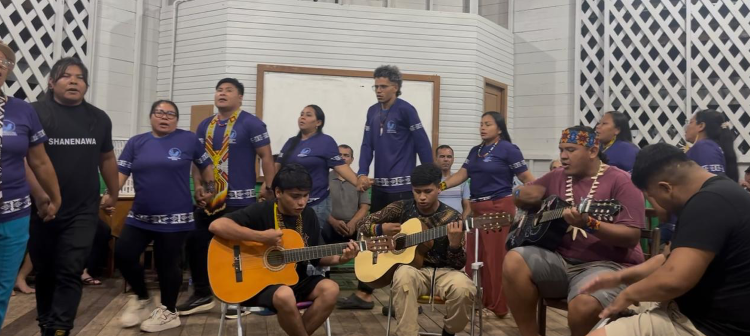
O curso de Licenciatura Indígena, do campus Floresta da Ufac, realizou o 1º Seminário Acadêmico de Apresentação de Trabalhos de Conclusão de Curso (TCCs). O evento possibilitou a defesa de 16 trabalhos nas aldeias Barão, da terra indígena Puyanawa, em Mâncio Lima (AC), e Morada Nova, na terra indígena Katukina/Kaxinawá, em Feijó (AC). As atividades ocorreram entre 25 de setembro e 2 de outubro, envolvendo estudantes, professores, egressos do curso, pós-graduandos e as comunidades locais.
Os TCCs defendidos nas aldeias são de autoria de discentes que ingressaram na Ufac em 2023 e deverão colar grau no início de 2027. Os temas das pesquisas contemplaram variados aspectos da vida indígena, abrangendo história, biografia, mitologia, organização política, território, medicina tradicional, grafismos, gênero, terminologias linguísticas, educação especial, atividade cinegética e rituais tradicionais.
A viabilização das defesas nas aldeias ocorreu pela primeira vez em 18 anos de existência da graduação e está de acordo com a pedagogia da alternância, pela qual parte da carga horária do curso é realizada nas comunidades indígenas dos alunos, por meio de pesquisa e extensão. Os recursos para realização do evento foram provenientes de projeto de extensão com o mesmo nome do seminário.
As bancas de avaliação foram compostas por docentes do curso, egressos de outras turmas da Licenciatura Indígena e egressos indígenas de outros cursos da Ufac, inclusive da pós-graduação. Também compuseram algumas bancas pessoas reconhecidas por suas comunidades com “notório saber”, expediente previsto no regulamento de TCC do curso. Além de familiares dos estudantes e moradores das aldeias, indígenas de outras etnias estiverem presentes no seminário.

Organização
A atividade no município de Mâncio Lima, que é vizinho ao campus Floresta, em Cruzeiro do Sul (AC), ocorreu num só dia, em 25 de setembro, com a defesa de dois TCCs. Já para o evento em Feijó foi necessário um deslocamento de ônibus, com duração de quase seis horas, em 30 de setembro, até o porto da cidade. E, à noite, uma embarcação levou cerca de 20 pessoas até a aldeia Morada Nova, onde houve uma recepção musical para o grupo. Na manhã do dia seguinte começaram as defesas, que prosseguiram até 2 de outubro.

ACRE
Ufac retoma Semana Acadêmica de Física após 6 anos, com planetário — Universidade Federal do Acre

A Universidade Federal do Acre (Ufac) realiza até esta sexta-feira, 23, a 3ª Semana Acadêmica de Física, no prédio do curso, no campus-sede, em Rio Branco. Iniciado nessa segunda-feira, 19, o evento retoma as atividades presenciais da semana acadêmica após seis anos de interrupção, causada pela pandemia de covid-19 e pela reorganização do calendário universitário.
A programação tem atrações abertas ao público, como oficinas de astronomia, observação do Sol com telescópio e um planetário móvel, instalado no segundo andar do prédio de Física. Há ainda palestras, apresentações de pesquisas de estudantes e minicursos práticos de elaboração de material didático, física experimental, criação de mapas, processamento de dados e sismologia.
Organizada em três eixos temáticos, a semana é voltada aos estudantes da licenciatura e do bacharelado em Física e do curso de Física Aplicada às Ciências da Terra. Os primeiros dias tiveram debates e palestras sobre o ensino de física e a formação docente. Em seguida, a programação trata de física pura, como mecânica quântica, relatividade e física de partículas, e termina com geofísica, astronomia e fenômenos naturais.
Segundo o coordenador do evento e professor do curso de Física, Victor Carreira, a retomada presencial reaproxima o curso da comunidade externa e das escolas de educação básica. Turmas do Instituto Federal do Acre visitaram a semana, e escolas da rede pública foram convidadas.
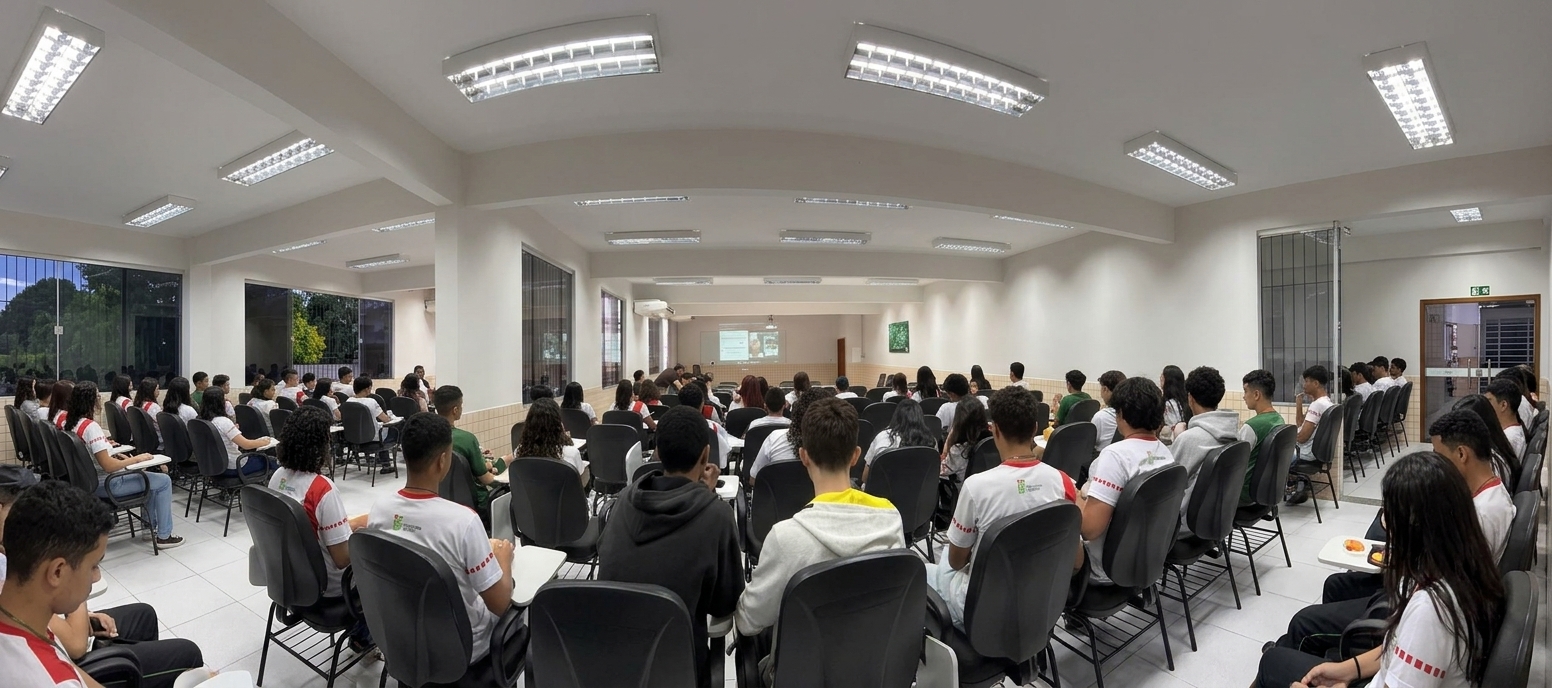
“A semana acadêmica é muito importante tanto para os nossos alunos quanto para a comunidade em geral de Rio Branco”, disse Carreira. “É uma oportunidade para jovens do ensino médio conhecerem a universidade e vivenciarem a ciência na prática.”
A cerimônia de encerramento ocorre nesta sexta-feira, 23, à tarde.
(Fhagner Soares, estagiário Ascom/Ufac)


 ACRE6 dias ago
Pavic-Lab da Ufac apresenta seis trabalhos em congresso internacional de computação — Universidade Federal do Acre
 ACRE5 dias ago
Ufac retoma Semana Acadêmica de Física após 6 anos, com planetário — Universidade Federal do Acre
 ACRE3 dias ago
Licenciatura Indígena realiza defesa de TCCs em aldeias no Juruá — Universidade Federal do Acre
 ACRE4 dias ago
Herbário da Ufac participa do 76º Congresso Nacional de Botânica — Universidade Federal do Acre


Warning: Undefined variable $user_ID in /home/u824415267/domains/acre.com.br/public_html/wp-content/themes/zox-news/comments.php on line 48
You must be logged in to post a comment Login