
ACRE
UEFA Nations League: What’s at stake, 2026 World Cup impact

The new-look UEFA Nations League (UNL) group stage is coming to a close, with much more at stake than you might think. In fact, you might say you need a degree in football administration to fully understand the machinations.
For the original editions, the Nations League was mostly about qualifying for the finals, plus promotion and relegation between the four levels. But the 2024-25 format sees more teams through to the knockout format, plus added promotion/relegation playoffs. And for the first time, the final positions will have some impact on the qualifying draw for the next FIFA World Cup.
With two rounds of games to be played, we look at who’s in contention and what it all means in the race to reach United States, Mexico and Canada in the summer of 2026.
Stick with us …
How does the UEFA Nations League work?
There are four “divisions”: League A, B, C (with four groups of four nations) and D (with two groups of three). League A is the strongest and League D the weakest.
Qualifying for the quarterfinals and finals
In League A, the top two teams in each of the four groups will go through to two-legged quarterfinals, to be played in March. The winners of these ties will take part in the finals, with one-legged semifinals and a final in June.
Promotion and relegation
The countries who win League B and C are automatically promoted to League A and B, respectively. Those who finish bottom of League A and B are directly relegated to League B and C.
There is some good news for countries who are relegated from League A in this edition. Being in League B for the 2026 UNL, they will be in a better position to claim a playoff for a place for Euro 2028.
The winners of the two League D groups are promoted, while the two teams in League C who finish bottom with the worst record go down.
Playoffs
New for this edition is promotion/relegation playoffs, also be to be held in March. Teams who are third in League A will play two-legged ties against second-placed nations from League B. Likewise, third in League B will face second in League C. The winners will play in the higher league.
The two nations who are bottom in League C with the best record will face a promotion/relegation playoff against runners-up of League D.
Why does it matter for World Cup qualifying?
There’s a handful of reasons and, remarkably, it’s more complicated than the UEFA Nations League itself.
World Cup qualifying draw seeding
Teams will be drawn into 12 groups of four or five nations. Groups of five will begin qualifying in March or June. Groups of four won’t play any qualifiers until September. Why’s that? Because fixture slots need to be free for countries to play those UNL playoffs and knockout ties.
The eight teams in the UNL quarterfinals will all need free dates in March, with the four finalists also requiring June to be empty. As the World Cup qualifying draw is on Dec. 13, FIFA won’t know who needs both March and June free. FIFA has therefore given UEFA permission to put all eight UNL quarterfinalists in Pot 1 of the World Cup draw. If you finish in the top two of UNL League A, you’re seeded and could get a more favourable route to the next World Cup.
Pot 1 will have 12 nations, and is completed by the four countries with the best FIFA World Ranking who aren’t yet seeded. England, who are in League B for this edition of the UNL, and Belgium are guaranteed to take Pot 1 slots, ranked fourth and sixth in the world respectively. As it stands, Switzerland and Austria will take the other two
For all other pots, places are allocated purely by FIFA World Ranking, and results this week could influence that. For instance, Scotland are in Pot 3 but could lift themselves into Pot 2 with good results.
But wait … Depending on how many teams need to play promotion and relegation playoffs, FIFA may have to juggle the pots slightly. For instance, if there are too many teams in Pot 3 who need to have March free, then a swap with Pot 2 or 4 might be needed. That’s probably an issue for another day…
One more complication? As the UNL playoffs don’t take place until March, eight of the 12 World Cup groups won’t know their full lineup until then. Four of the groups with four teams will get “winners of playoff tie,” as they must be free for March and June. Four others get “losers of playoff tie.” Only four groups will be complete as of Dec. 13.
Playoff places for UNL group winners
The 12 winners of the UEFA World Cup qualifying groups will go direct to the World Cup. The 12 runners-up enter playoffs.
There are also four playoff slots for the best UNL group winners who do not finish in the top two of a World Cup group. What does that mean? Well, the UNL League A winners are very unlikely to need a World Cup playoff, which means winning a League B group will almost certainly give you a playoff, and being one of the best League C group winners gives a great chance.
There are 16 teams in the playoffs, creating four paths with one-legged semifinals and a final, to be played in March 2026.
UEFA and FIFA certainly know how to make this complicated.
1:03
Musiala admits he has ‘never looked back’ after picking Germany over England
Jamal Musiala says he doesn’t regret his decision to play for Germany and is hopeful ahead of the World Cup.
What’s confirmed?
Qualified for UNL finals: France, Germany, Italy, Spain
League B/C playoffs: Republic of Ireland
Relegation from League B to League C: Finland, Kazakhstan
Promotion from League C to League B: North Macedonia
What’s at stake in the Nations League this week
This section will be updated through the final matches until the end of the group phase on Tuesday
LEAGUE A1
Portugal (10 points) need one point to secure a place in the quarterfinals, while Scotland (1) face an uphill struggle to avoid relegation to League B.
The real battle is for second and third, with Croatia (7) ahead of Poland (4).
Croatia have the superior head-to-head record so can book a top-two slot with a draw in Scotland on Friday. That will likely leave Poland facing a relegation playoff, though they could yet be overtaken by Scotland on the final day when the two countries meet in Warsaw.
LEAGUE A2
Italy (13) and France (10) have qualified for the quarterfinals.
Israel (1) drew with France in Saint-Denis on Thursday to avoid automatic relegation. Israel must beat Belgium (4) by 3+ goals in Budapest (Hungary) on Sunday to avoid bottom spot. That means Belgium look likely to be in the relegation/promotion playoffs.
LEAGUE A3
Germany (10) have already booked a slot in the quarterfinals, while Bosnia and Herzegovina (1) must win both of their matches to avoid relegation.
Netherlands (5) go into the last week in second but are only ahead of Hungary (5) on goal difference. The two teams meet in Amsterdam on Saturday, and if there’s a winner they will be through to the last eight.
LEAGUE A4
Spain (10) have also secured a place in the top two.
Denmark (7) are in a good position and will be through if they better Serbia‘s result on Friday. If not, it will come down to the meeting between the two teams in Leskovac on Monday.
The best bottom-of-the-group Switzerland (1) can hope for is to climb above Serbia into the relegation playoff place. They face each other in Zürich on Friday, and the Swiss must win to have any chance of climbing off the foot.
LEAGUE B1
The group is completely up in the air, with the four nations separated by three points.
Czechia (7) sit top and have promotion in their own hands but sit just one point ahead of Georgia (6) and Albania (6). Ukraine (4) are bottom yet very much within touching distance of at least a promotion playoff.
Albania have two home games, which gives them an advantage, while Ukraine have it all to do with two away matches. Czechia can seal promotion on Saturday if they win in Albania and Georgia lose at home to Ukraine.
LEAGUE B2
England (12) beat Greece (12) 3-0 in Athens on Thursday and now have the group in their hands on head-to-head record. If England win at home to Republic of Ireland (6) on Sunday — or match/better Greece’s result — then they are promoted. That would be good news for League C teams looking for a World Cup playoff, as England will be expected to be in the top two of their qualifying group.
Greece must get a better result than England to be promoted automatically, but it looks like they face a playoff.
Greece play Finland (0), who have already been relegated. Ireland, meanwhile, will face a League C team in a playoff.
LEAGUE B3
Another close group featuring Austria (10), Norway (10) and Slovenia (7).
Austria are in pole position and will be automatically promoted with a home win over Slovenia on Sunday, as they hold the head-to-head over Norway. However, if they draw/lose then Norway can overtake them with a win at home to Kazakhstan.
If Slovenia beat Austria and Norway lose, all three teams would be on 10 points and the results involving Kazakhstan are removed for the head to head. Norway would win the group with second decided on goal difference — and Slovenia would need a huge win over Austria to take second. It means that, realistically. Slovenia will be third.
Kazakhstan (1) have been relegated.
LEAGUE B4
Turkey (10) and Wales (8) are in competition to go straight up to League A and meet in Kayseri on Saturday. Turkey will be promoted, and secure a likely World Cup playoff, if they can get a home victory.
Iceland (4) have an outside chance of second, if Wales are defeated, but they would have to win in Montenegro (0) in their first game and then in Cardiff on Tuesday — which would dump Wales into the relegation playoff. Montenegro must win at home to Turkey to stand any chance of avoiding instant relegation.
LEAGUE C1
Sweden (10) are above Slovakia (10) on goal difference with the two countries meeting in Solna on Saturday. If there’s a winner in that game, it will come with automatic promotion. If the game is a draw, Slovakia may require a huge win over Estonia on Tuesday to finish top because of inferior goal difference.
Azerbaijan (0) host Estonia (3) on Saturday and must win to avoid being last. Having zero points, Azerbaijan also face being automatically relegated to League D.
LEAGUE C2
Romania (12) have the best record in League C, meaning they have an excellent chance of a World Cup playoff through the UNL — if they can hold on to top spot. They host Kosovo (9) on Friday, and a draw will secure it. Kosovo lost 3-0 at home to Romania, so would need a huge win in Bucharest to reverse the head-to-head record. The odds are that Kosovo will finish second even if they produce a shock.
Lithuania (0) must win in Cyprus (3) to have any chance of avoiding bottom spot. Like Azerbaijan, Lithuania face automatic relegation having lost every match.
LEAGUE C3
A close group headed by Northern Ireland (7), followed by Belarus (6) and Bulgaria (5). Northern Ireland host Belarus on Friday and will be promoted with a victory if Bulgaria fail to win in Luxembourg (2).
If Luxembourg can get a victory, they have a real chance of avoiding last place and couldn’t be automatically relegated.
LEAGUE C4
North Macedonia (13) won the group with a 2-0 victory over Latvia and are in a good position get a World Cup playoff due to their record.
The real battle is for the other three places between Faroe Islands (6), Armenia (4) and Latvia (4). The Faroes need win away to North Macedonia to guarantee finishing second; a draw will also be enough as long as Latvia do not win. If Latvia-Armenia is a draw, the Faroes are second regardless of their own result.
If Latvia win, they can only finish second if the Faroes draw/lose.
If Armenia win, they can only finish second if the Faroes lose.
Armenia hold the head-to-head over Latvia, so Latvia must win to avoid finishing bottom but whoever is fourth won’t be automatically relegated.
The Faroes now can’t finish bottom so cannot be relegated.
LEAGUE D1
Gibraltar (5) will be promoted with a win or draw in San Marino (3) on Friday.
Liechtenstein (2) will have second to play for when they take on San Marino on Monday, but they cannot win the group.
LEAGUE D2
Moldova (6) lead Malta (6) on head-to-head goal difference. Moldova will be promoted if they win in Andorra (0) on Saturday, which will consign Malta to a playoff.


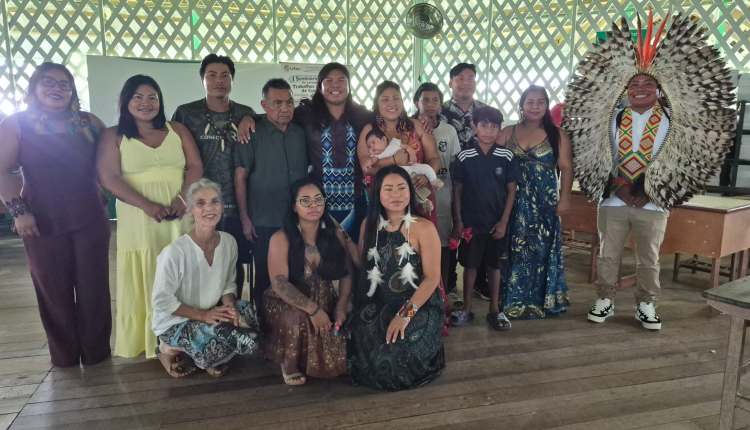
O curso de Licenciatura Indígena, do campus Floresta da Ufac, realizou o 1º Seminário Acadêmico de Apresentação de Trabalhos de Conclusão de Curso (TCCs). O evento possibilitou a defesa de 16 trabalhos nas aldeias Barão, da terra indígena Puyanawa, em Mâncio Lima (AC), e Morada Nova, na terra indígena Katukina/Kaxinawá, em Feijó (AC). As atividades ocorreram entre 25 de setembro e 2 de outubro, envolvendo estudantes, professores, egressos do curso, pós-graduandos e as comunidades locais.
Os TCCs defendidos nas aldeias são de autoria de discentes que ingressaram na Ufac em 2023 e deverão colar grau no início de 2027. Os temas das pesquisas contemplaram variados aspectos da vida indígena, abrangendo história, biografia, mitologia, organização política, território, medicina tradicional, grafismos, gênero, terminologias linguísticas, educação especial, atividade cinegética e rituais tradicionais.
A viabilização das defesas nas aldeias ocorreu pela primeira vez em 18 anos de existência da graduação e está de acordo com a pedagogia da alternância, pela qual parte da carga horária do curso é realizada nas comunidades indígenas dos alunos, por meio de pesquisa e extensão. Os recursos para realização do evento foram provenientes de projeto de extensão com o mesmo nome do seminário.
As bancas de avaliação foram compostas por docentes do curso, egressos de outras turmas da Licenciatura Indígena e egressos indígenas de outros cursos da Ufac, inclusive da pós-graduação. Também compuseram algumas bancas pessoas reconhecidas por suas comunidades com “notório saber”, expediente previsto no regulamento de TCC do curso. Além de familiares dos estudantes e moradores das aldeias, indígenas de outras etnias estiverem presentes no seminário.
Organização
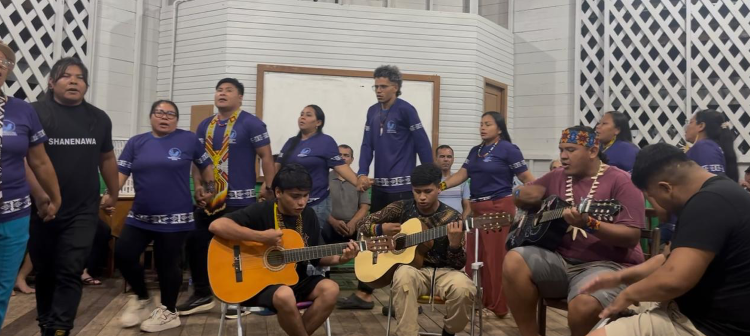
A atividade no município de Mâncio Lima, que é vizinho ao campus Floresta, em Cruzeiro do Sul (AC), ocorreu num só dia, em 25 de setembro, com a defesa de dois TCCs. Já para o evento em Feijó foi necessário um deslocamento de ônibus, com duração de quase seis horas, em 30 de setembro, até o porto da cidade. E, à noite, uma embarcação levou cerca de 20 pessoas até a aldeia Morada Nova, onde houve uma recepção musical para o grupo. Na manhã do dia seguinte começaram as defesas, que prosseguiram até 2 de outubro.

ACRE
Ufac retoma Semana Acadêmica de Física após 6 anos, com planetário — Universidade Federal do Acre

A Universidade Federal do Acre (Ufac) realiza até esta sexta-feira, 23, a 3ª Semana Acadêmica de Física, no prédio do curso, no campus-sede, em Rio Branco. Iniciado nessa segunda-feira, 19, o evento retoma as atividades presenciais da semana acadêmica após seis anos de interrupção, causada pela pandemia de covid-19 e pela reorganização do calendário universitário.
A programação tem atrações abertas ao público, como oficinas de astronomia, observação do Sol com telescópio e um planetário móvel, instalado no segundo andar do prédio de Física. Há ainda palestras, apresentações de pesquisas de estudantes e minicursos práticos de elaboração de material didático, física experimental, criação de mapas, processamento de dados e sismologia.
Organizada em três eixos temáticos, a semana é voltada aos estudantes da licenciatura e do bacharelado em Física e do curso de Física Aplicada às Ciências da Terra. Os primeiros dias tiveram debates e palestras sobre o ensino de física e a formação docente. Em seguida, a programação trata de física pura, como mecânica quântica, relatividade e física de partículas, e termina com geofísica, astronomia e fenômenos naturais.
Segundo o coordenador do evento e professor do curso de Física, Victor Carreira, a retomada presencial reaproxima o curso da comunidade externa e das escolas de educação básica. Turmas do Instituto Federal do Acre visitaram a semana, e escolas da rede pública foram convidadas.
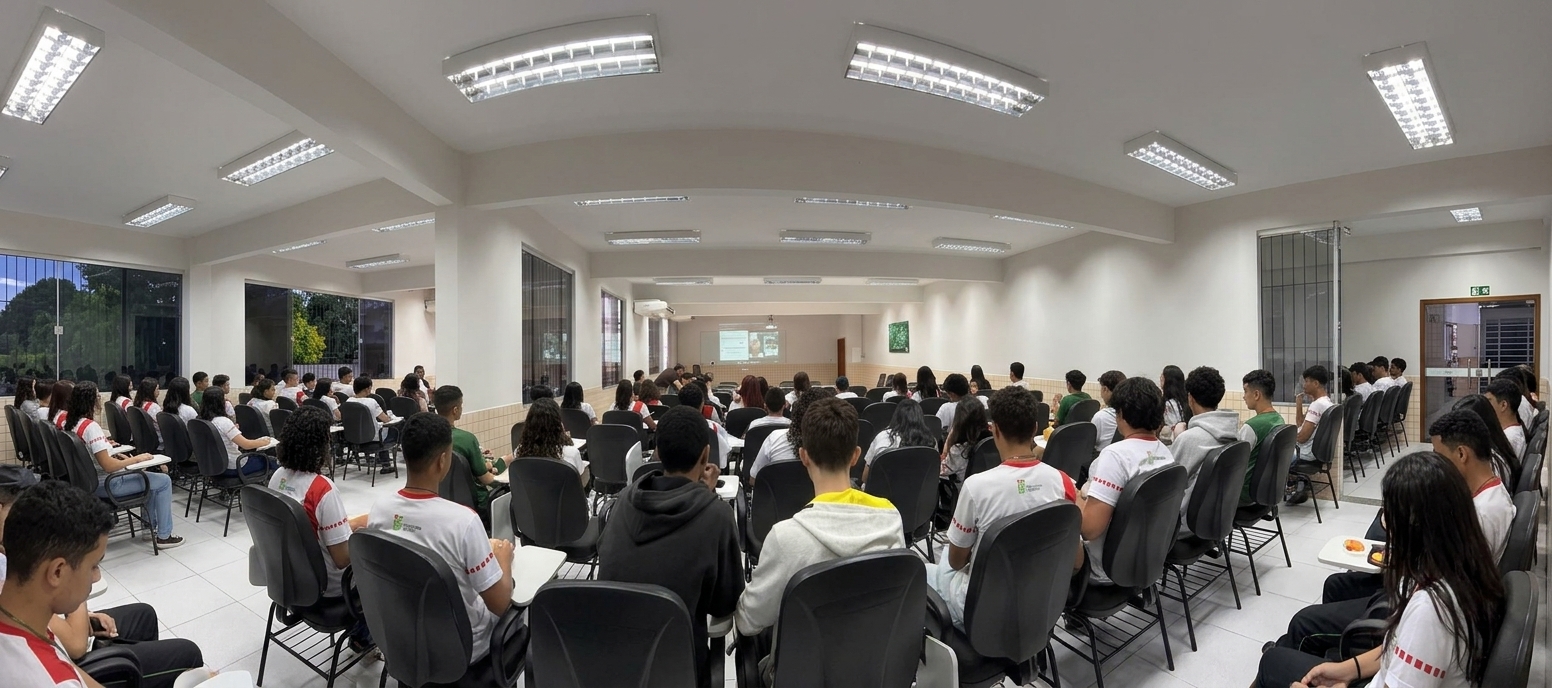
“A semana acadêmica é muito importante tanto para os nossos alunos quanto para a comunidade em geral de Rio Branco”, disse Carreira. “É uma oportunidade para jovens do ensino médio conhecerem a universidade e vivenciarem a ciência na prática.”
A cerimônia de encerramento ocorre nesta sexta-feira, 23, à tarde.
(Fhagner Soares, estagiário Ascom/Ufac)


 ACRE6 dias ago
Pavic-Lab da Ufac apresenta seis trabalhos em congresso internacional de computação — Universidade Federal do Acre
 ACRE5 dias ago
Ufac retoma Semana Acadêmica de Física após 6 anos, com planetário — Universidade Federal do Acre
 ACRE3 dias ago
Licenciatura Indígena realiza defesa de TCCs em aldeias no Juruá — Universidade Federal do Acre
 ACRE4 dias ago
Herbário da Ufac participa do 76º Congresso Nacional de Botânica — Universidade Federal do Acre


Warning: Undefined variable $user_ID in /home/u824415267/domains/acre.com.br/public_html/wp-content/themes/zox-news/comments.php on line 48
You must be logged in to post a comment Login